
Egyptian Horizon Guides — Local Customs
Cultural Etiquette: Respectful Engagement in Egypt
Egypt is a country with a deep sense of tradition and social order, where history and modern faith intertwine to shape daily life. For the traveller into Egypt, understanding these nuances is more than a courtesy; it is the key to building rapport and moving through the country with ease.
A Living Culture
Tradition shapes every interaction
This guide outlines the social norms, dress codes, and communication styles that will help you navigate both the bustling streets of Cairo and the quiet villages of the south with grace and respect. Every section below draws on lived experience from our egypt travelling guides, giving you practical steps rather than abstract advice.
Egyptians are warm hosts. When you show that you understand the rhythm of their daily life, doors open. When you do not, you may find yourself politely sidelined. A few small adjustments in how you dress, greet, eat, and photograph can change the entire tone of your trip.
First Threshold
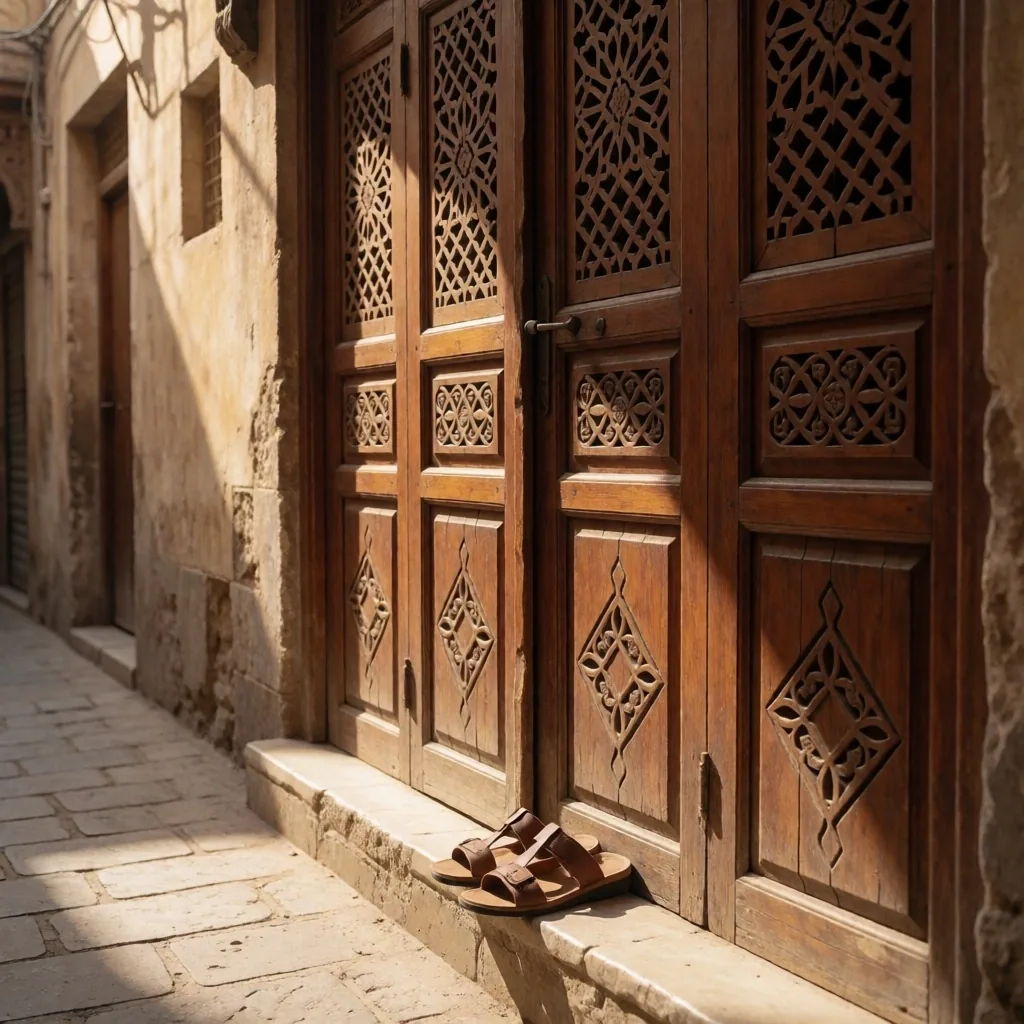
Respect begins at the door.
Chapter One
The Importance of Modest Dress

Egypt is a conservative society where clothing is often seen as a sign of respect for oneself and others. While coastal areas are more relaxed, urban and rural environments require modest attire.
For men and women alike, this generally means covering the shoulders and knees. Women may find that wearing loose-fitting clothing that covers the chest and arms helps minimize unwanted attention and shows respect for local sensitivities, especially when visiting religious sites or traditional neighborhoods.
In practice, the contrast is visible the moment you step off the Nileside corniche and into an older quarter. On the coast at Hurghada or Sharm El-Sheikh, resort wear is accepted. A short walk inland, and the expectation changes. Linen trousers, long-sleeved cotton shirts, and scarves you can drape over your shoulders are practical choices. They keep you cool in dry heat and signal that you understand where you are.
Practical checklist
- Pack lightweight scarves for shoulders and head — useful at sites and in mosques.
- Choose breathable fabrics: cotton and linen outperform synthetics in desert heat.
- Trousers and long skirts for both men and women work across all regions.
- Save swimwear for the beach and resort pools — not for town streets or transport.
Chapter Two
Greeting and Social Interaction
Greetings in Egypt are often warm and extended. It is common to see people shaking hands and asking about each other's health and family before getting to the point of a conversation.
Open Warmly
When meeting someone for the first time, a polite "Assalamu Alaikum" — peace be upon you — is a universally appreciated opening. It works across formal and casual settings.
Read the Room
Conservative members of the opposite sex may not feel comfortable with physical contact. A simple nod and a hand placed gently over the heart is a respectful alternative to a handshake.
Accept the Pause
Do not rush to business. Asking about family, health, and the day's events is not small talk — it is the foundation of trust. If you are offered tea, accept it. The conversation happens around it.
Egyptians frequently ask "Iznak ey?" (How are you?) and expect more than a one-word reply. A brief, genuine answer about your day, your family, or your journey is a sign that you are present. The exchange is not transactional — it is how relationships begin.
Chapter Three
Navigating the Concept of 'Baksheesh'
Baksheesh is a complex social practice that can be understood as a combination of tipping, almsgiving, and a service fee. It is expected for small favors, such as someone helping you with your bags or providing directions.
While it can be confusing for a traveller into Egypt, it is helpful to view it as a way of redistributing wealth in a society without a formal social safety net. The person who carries your suitcase or points you to a hidden courtyard is performing a service; a small coin acknowledges that.
Carrying small denominations of local currency specifically for this purpose is a practical tip that appears in every set of egypt travelling guides we produce. Five- and ten-pound notes cover most situations. Larger notes for genuinely helpful guides, and a polite decline when a request feels unreasonable.
When Baksheesh Applies
- Carrying bags to your room Expected
- Giving directions on the street Optional
- Using a public restroom attendant Expected
- A local guide for the morning Negotiate
- Unsolicited help at a site Decline
Chapter Four
Dining Etiquette and the Right Hand
When invited to a meal, it is customary to remove your shoes before entering the living area. Always use your right hand for eating, drinking, and passing objects, as the left hand is traditionally reserved for personal hygiene.
It is also polite to accept at least a small portion of everything offered, as refusing food can be seen as a slight to the host's hospitality. Leaving a tiny bit of food on your plate indicates that you are full and that the host has provided more than enough — a sign of generosity fulfilled.
If you are served bread — and you will be, at nearly every meal — tear it with your right hand rather than cutting it with a knife. Bread is the centerpiece of the table, used to scoop stews and salads. Complimenting the cook is welcomed and expected.
Shoes off
Look for shoes at the threshold. If others have removed theirs, do the same before stepping inside.
Right hand
Eat, pass, and gesture with the right hand. The left is kept out of the shared plate entirely.
Accept first
Take at least a small taste of each dish. A full refusal reads as rejection of the home.
Leave a morsel
A scrap left on the plate says the host has fed you well. An empty plate can invite a refill.
Chapter Five
Religious Observation and Public Life
The call to prayer — the Adhan — occurs five times a day and significantly impacts the rhythm of the city. During these times, and especially during Friday midday prayers, many shops may close temporarily.
During the holy month of Ramadan, Muslims fast from sunrise to sunset. While non-Muslims are not expected to fast, eating, drinking, or smoking in public during daylight hours is considered highly insensitive. Understanding these cycles allows you to plan your movements without interrupting the local flow of life.
You do not need to change your plans entirely — restaurants in tourist zones remain open, and hotel dining continues as normal. The key is discretion. If you buy water from a kiosk, tuck it into your bag rather than drinking it on the street. Wait until you are indoors or in a designated space.
Friday in Egypt functions much like Sunday in parts of Europe: a family day, a slower morning, and a midday gathering. Government offices and many businesses close for the day. Plan errands for Saturday through Thursday, and use Friday for exploring outdoor sites, walking the corniche, or sharing a long lunch.
Chapter Six
Photography and Privacy
Egyptians are generally very friendly, but always ask for permission before taking a photo of someone, especially in rural areas or of women. A respectful approach — putting the camera away and engaging in conversation first — often leads to better experiences and more meaningful memories.
What to avoid
-
Government buildings and military installations. Taking photos of these is strictly prohibited and can lead to questioning by authorities.
-
Bridges and checkpoints. The same restriction applies. When in doubt, keep your camera down.
-
Unconsented portraits. A telephoto shot of a stranger in a market is not worth the discomfort it causes.
-
Tripods in public squares without checking first — using professional-grade equipment in public spaces may require a permit.
A better approach
Lower the camera. Say "Sura?" (Photo?) with a smile. If the answer is no, thank them and move on. If yes, show them the frame on your screen afterward — people appreciate seeing the result. You will frequently be offered tea and a conversation that lasts far longer than the photograph.
Quick phrase
"Mumkin sura?"
May I take a photo?
Chapter Seven
Gender Dynamics in Public Spaces
Public spaces in Egypt can sometimes be gender-segregated, such as specific cars on the metro or separate lines at government offices. Travelers should observe and follow these divisions where they exist.
The Cairo metro has designated women-only cars, clearly marked in pink. Using them is a matter of personal preference, but solo female travelers often find them a calmer option during rush hours. In other settings — a government office, a bread line — separate windows for women are common and worth noting before you queue.
Female travelers moving alone should be confident and clear in their interactions. If you ever feel uncomfortable, approaching an older woman or a family for assistance is a socially accepted way to find a safe buffer in a crowded environment.
Confidence matters. Walking with purpose, dressing in modest layers, and wearing a plain band on your ring finger can all reduce unwanted attention. A firm "La, shukran" — no, thank you — said clearly and without a smile, is the most effective tool when someone oversteps.
Chapter Eight
The Art of Negotiation
Haggling is a standard part of commerce in traditional markets and for services like taxi rides. It should be approached as a social game rather than a confrontation. A good rule of thumb is to have a price in mind, start lower, and meet in the middle with a smile.
Where to Haggle
- Souks, bazaars, and street-side stalls
- Taxi rides without a meter
- Souvenir shops and craft workshops
- Felucca rides on the Nile
Where Prices Are Fixed
- Pharmacies and modern shops
- Restaurants with printed menus
- Ride-hailing apps with upfront fares
- Grocery stores and chain retailers
Once a price is agreed upon, it is considered a matter of honor to follow through with the purchase. Walking away after a handshake deal is a poor reflection on the buyer, not the seller. In modern shops and pharmacies, prices are fixed, and haggling is not appropriate.
Chapter Nine
Environmental Stewardship as Respect
Respecting the land is as important as respecting the people. Littering is a significant issue in some areas, and as a guest, you should lead by example by disposing of your waste properly.
In desert and coastal environments, being mindful of your ecological footprint is a form of cultural respect toward the future generations of Egyptians. Protecting the natural beauty of the Nile and the Red Sea is a shared responsibility that locals increasingly value in their visitors.
Coral reefs along the Red Sea coast are fragile. Choose reef-safe sunscreen, do not stand on coral, and keep a respectful distance from marine life. In the desert, stay on established tracks to avoid disturbing thin crusts of biological soil that take decades to form.


Carry a small bag for your own waste. In remote sites, bins are rare — what you pack in, pack out.
Chapter Ten
Language and the Power of 'Inshallah'
You will frequently hear the phrase "Inshallah" — God willing. It reflects the local belief that the future is ultimately out of human hands. For the traveller into Egypt, it often means that a plan is a goal rather than a guarantee. Learning to embrace this flexibility will reduce frustration when schedules shift.
A few words of Egyptian Arabic — like "Shukran" (thank you) or "Aiwa" (yes) — can go a long way in breaking the ice and showing that you value the local culture.
Shukran
Thank you
Aiwa
Yes
La
No
Min fadlak
Please
Assalamu Alaikum
Peace be upon you
Inshallah
God willing
Sura
Photo
Kam?
How much?
Mumkin
Is it possible?
These are spoken, everyday Egyptian Arabic phrases — not formal Modern Standard Arabic. Egyptians will understand you, and the effort alone usually earns a smile and a warmer welcome. For deeper preparation, our full guide to basic Egyptian Arabic is available below.
Quick Reference
Cultural Do's and Don'ts
A condensed summary you can keep on your phone while you travel. Every rule here comes from the chapters above.
Do
- Dress modestly, covering shoulders and knees in urban and rural areas.
- Ask permission before photographing people, especially women.
- Use your right hand for eating and passing objects at meals.
- Carry small notes for baksheesh and tips throughout the day.
- Learn a handful of Arabic words — Shukran opens doors.
Don't
- Don't eat, drink, or smoke in public during Ramadan daylight hours.
- Don't photograph government buildings, bridges, or military sites.
- Don't initiate physical contact with someone of the opposite sex unless they offer first.
- Don't haggle in pharmacies, modern shops, or places with printed prices.
- Don't lose your temper when plans shift — Inshallah is part of the rhythm.
Continue Your Journey
Related guides for the traveller into Egypt
Cultural awareness is one piece of the puzzle. These companion guides cover the practical side of moving through Egypt with confidence.
If you have a specific question about a region or a custom that is not covered here, our team at Egyptian Horizon Guides is available seven days a week. Reach us at [email protected] or by phone at +201211121507.
Guide to Basic Egyptian Arabic
Everyday phrases, pronunciation, and context for conversations in markets, taxis, and homes.
Read more on Common Questions →
Ramadan Travel Advice
What stays open, what closes, and how to plan your daily rhythm during the holy month.
See General Requirements →
Transportation Tips
Metro lines, taxi etiquette, and how to move between cities with confidence.
Getting Around →
Regional Cuisine
What to order, how meals are structured, and how to accept a home invitation gracefully.
Food and Dining →